- Retirement spending
- Current savings and contributions
- Debt reduction
- The way assets are invested
- Whether retirement is immediate or staged
- Housing and major purchase decisions

RETIREMENT TIMING
Could you afford to retire at 60?
Retiring at 60 depends on more than your super balance. See whether your spending, available assets and future income are aligned for the years ahead.

4.9

46 Google Reviews




Trusted by 5,150+ clients across Australia since 1986
1986
Founded to help Australians build wealth
5,150+
Clients helped
$750M+
Funds under advice
9.4/10
Client satisfaction rating
10+
Years with us, on average
Retiring at 60 is not just an age. It's a set of conditions.
The date becomes realistic when your expected spending can be supported without relying on employment income, your assets are accessible at the right times and the plan has room for uncertainty.
That can look different for every household. Some people stop work completely.
Others reduce their hours, consult, take a career break or create a staged transition.
That can look different for every household. Some people stop work completely.
Others reduce their hours, consult, take a career break or create a staged transition.
The lifestyle you want
Desired income, travel, family support and major purchases.
The wealth you’ve built
Super, investments, cash, property and other financial assets.
How the plan holds together
Retirement timing, tax, inflation, market conditions and longevity.


Six questions to answer before choosing the date
01
What will retirement cost?
Define the lifestyle first, including regular spending, travel, large purchases, housing and support for family.
02
Which assets are available, and when?
Super, cash and investments may become available under different conditions. The timing of access needs to match the timing of spending.
03
Where will income come from?
Retirement income may draw on several sources. They need to be considered together rather than as separate balances.
04
Is there enough flexibility?
A plan needs accessible reserves for unexpected costs without forcing long-term investments to be sold at an inconvenient time.
05
What happens if markets fall?
Poor returns early in retirement can have a lasting effect when withdrawals are also being made.
06
Are both partners aligned?
Different retirement dates, priorities and financial positions can materially change the household plan.
Small changes can alter your retirement timeline
Factors you may be able to influence
Factors your plan needs to withstand
- Market movements
- Inflation
- Unexpected expenses
- Changes in health or family circumstances
- How long retirement lasts
- Changes to relevant rules and entitlements
A useful plan does not assume uncertainty disappears. It shows where flexibility exists if circumstances change.
Your number is only the starting point
A retirement target can be useful, but it cannot show whether your plan is ready to turn accumulated wealth into sustainable income.
Before relying on a number, it's worth asking:
Before relying on a number, it's worth asking:
- Is the intended retirement lifestyle clearly defined?
- Are super, investments and other income being considered together?
- Is there enough accessible cash for near-term spending and surprises?
- Could the plan adapt if markets fall early in retirement?
- Are housing, family and estate decisions aligned with the plan?
Common retirement questions we hear in our client conversations:
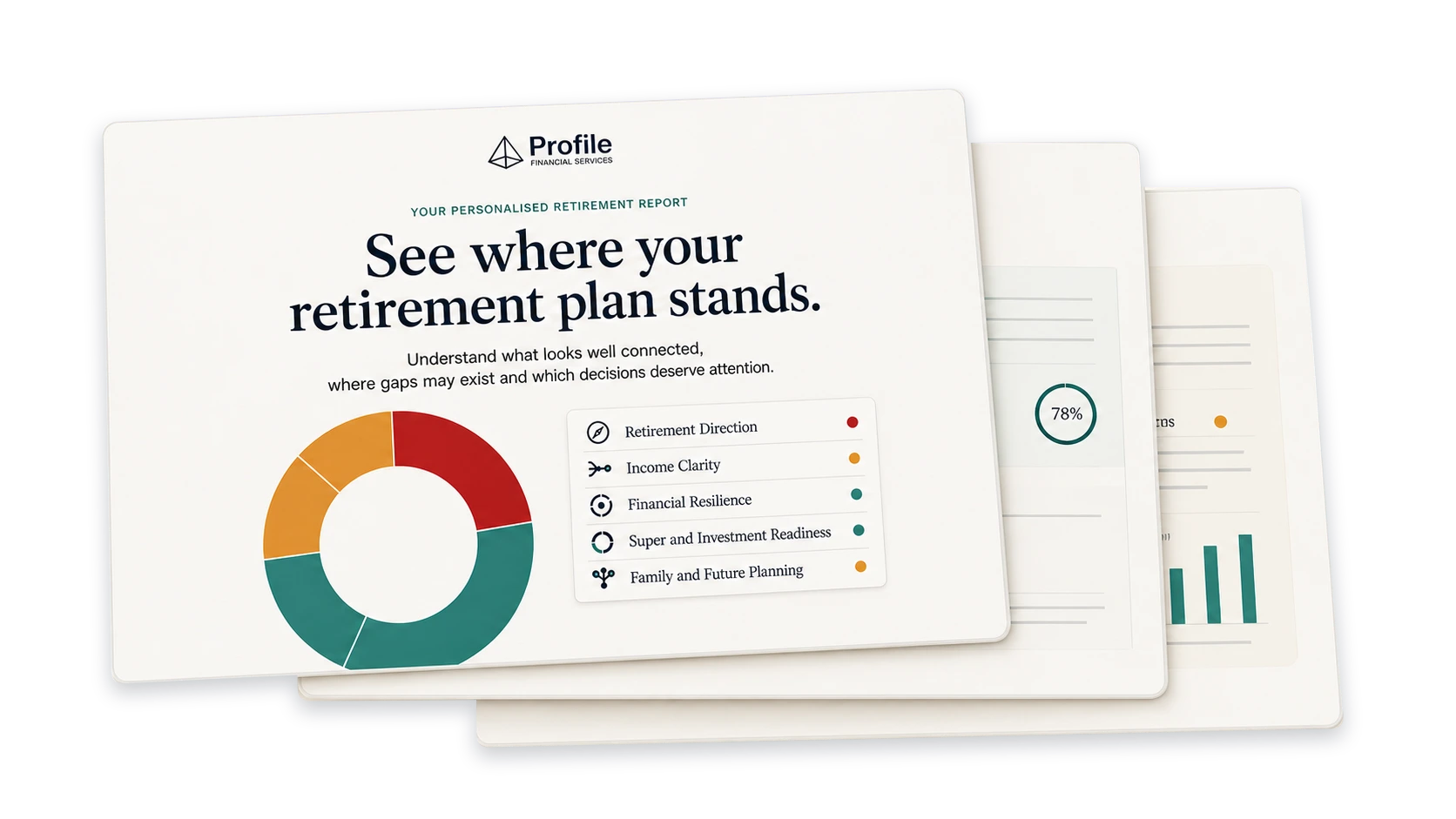
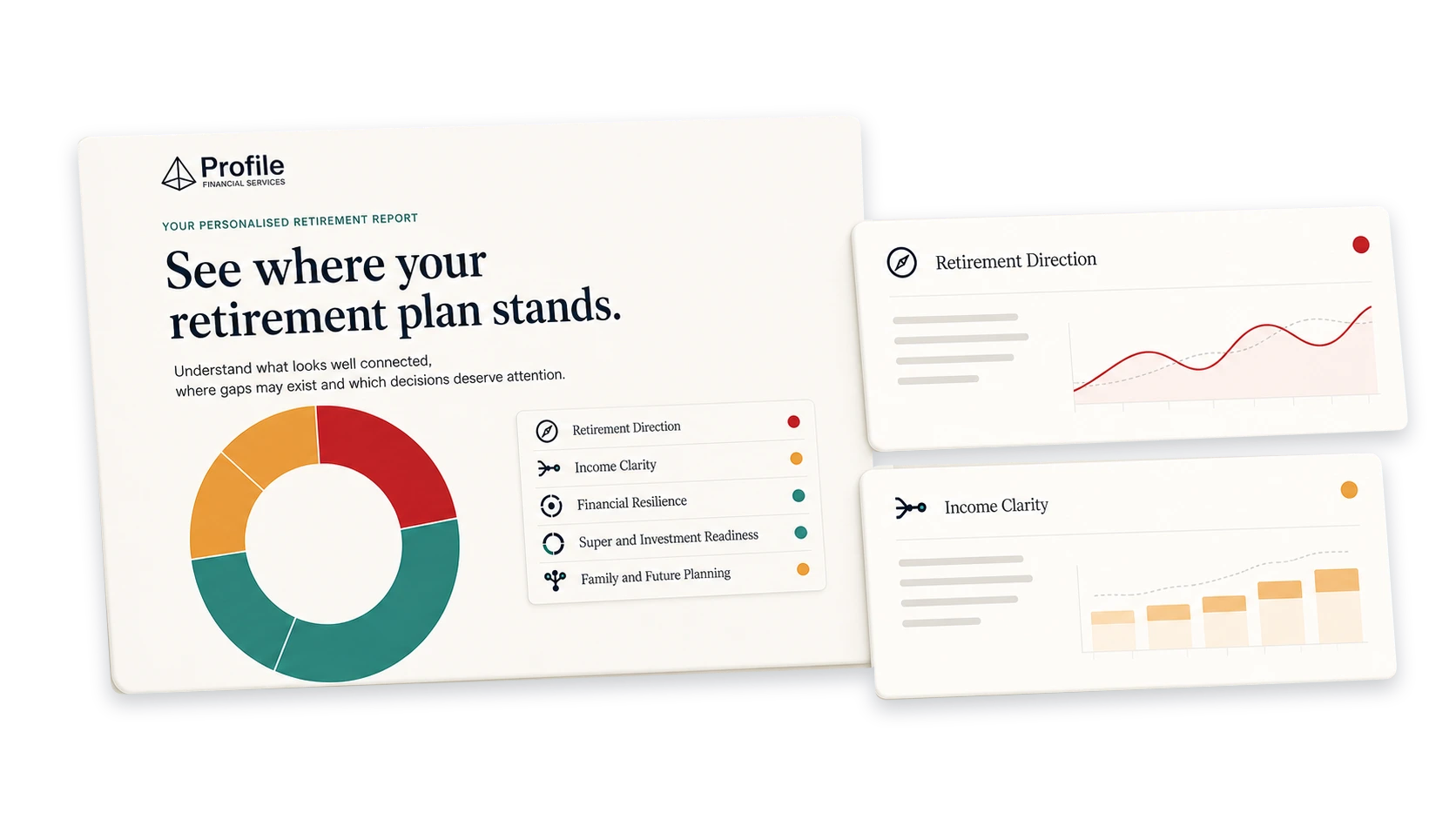
See where your retirement plan stands
In three minutes, see where your plan looks strong, where gaps may exist and which decisions deserve attention.